Virtual showroom or model unit: what each costs a developer
What a virtual showroom costs a real estate developer, from $315 for a 360° tour to $5,000 for every unit of a building, against $80,000–1.5 million for a show flat or sales gallery, and when each is enough.
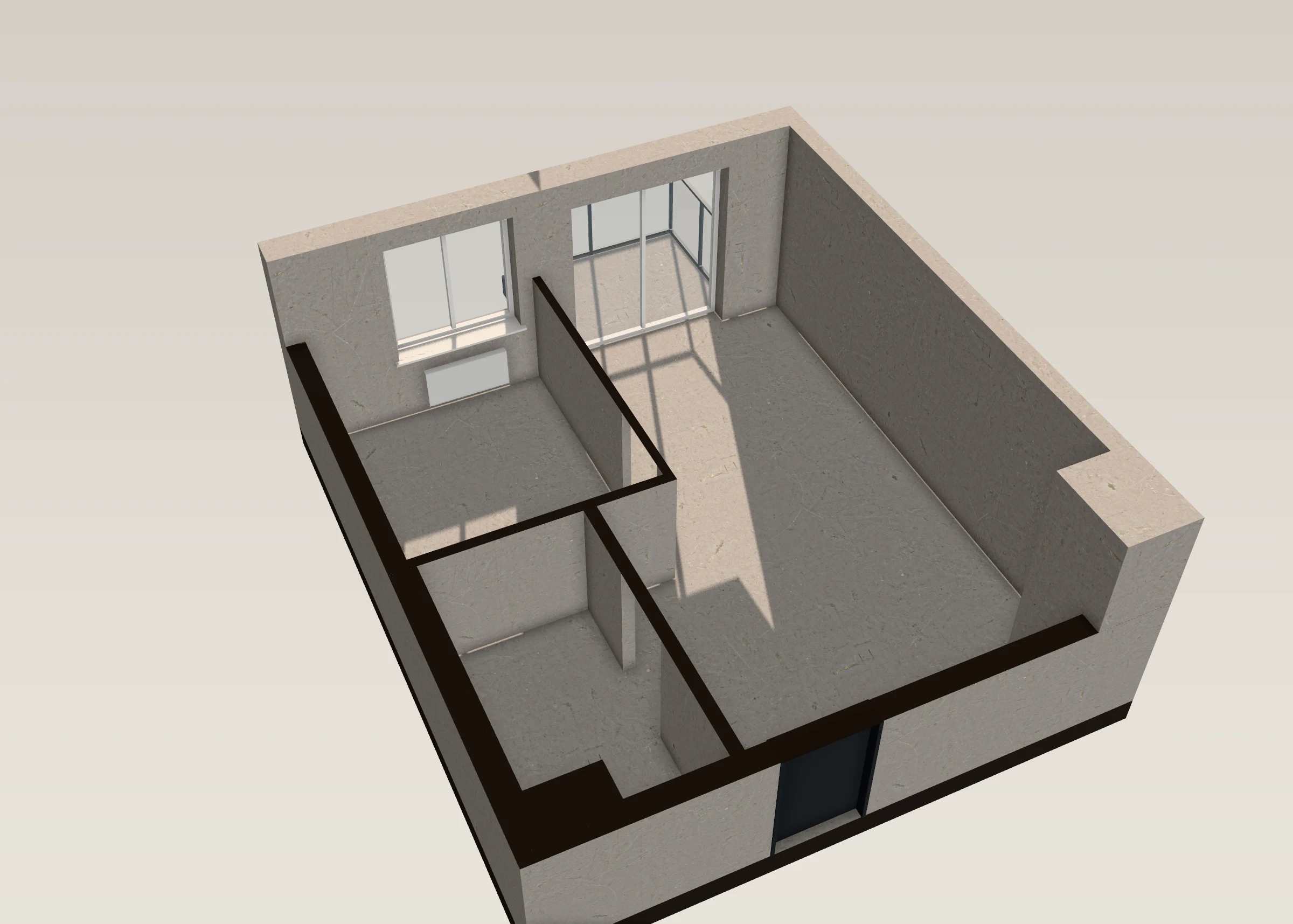
A physical model unit or sales gallery costs a developer from about $80,000 for a staged model home to $1.5 million or more for a tower’s sales centre, and it shows one layout to buyers who can visit. A virtual showroom shows every layout to buyers anywhere, from a few thousand dollars per building. A show flat is the most persuasive thing a developer can build: buyers stand in the room, touch the worktop and open the door. It is also one of the most expensive pieces of marketing, and it usually shows one layout to the people who can travel to see it. This guide puts numbers on both sides so you can decide what a project needs.
Figures below are what published sources report. They are not quotes for your project, and several come from vendors who sell the alternative; those are marked.
What physical sales galleries cost
- A sales centre with a model suite: one Minneapolis luxury tower spent $1.5 million on its sales centre, with a full-scale model of the tower and furnished display rooms. That is more than the $900,000 the cheapest condo in the building started at.
- Miami luxury towers: developers there spend millions on galleries: one is reported at $5–8 million, with a concierge service that shuttles buyers to nearby shops and restaurants. Leases for these galleries typically run two to five years.
- A furnished model unit: a vendor of virtual staging, R2U, quotes $90,000–360,000 or more for luxury developments and over $720,000 at the top, citing the Brazilian magazine Exame (2023). Treat it as a vendor’s range.
- Builders’ model houses: in the US, a buyer’s guide puts the upgrades and staging in a model home at $80,000–150,000 or more, of which $15,000–40,000 is furniture and staging that belongs to the stager, not the house.
The costs that aren’t on the invoice
The unit can’t be sold while it is on show. A flat used as the model earns nothing until the sales campaign ends. R2U puts the lost revenue above $20,000 a year on a mid-market unit (again a vendor’s estimate); on a luxury unit it is higher.
It has a short life. A gallery on a two- to five-year lease is built to be taken down. The fit-out is written off by handover.
It shows one layout. A project has several unit types across floors and orientations. The model shows one, furnished one way. Buyers of the other types are asked to imagine.
It only reaches visitors. Off-plan, many buyers are abroad. In Dubai, 69% of residential sales in 2025 were off-plan; most of those buyers will never stand in the gallery.
What a physical model does that a screen doesn’t
Be fair to it. A real room lets people judge scale with their body, feel materials, and meet a salesperson in a setting that signals a serious project. For high-end towers, the gallery is part of the brand, and a screen does not replace that. If your buyers are local, wealthy and expect a visit, keep the gallery.
What a virtual showroom covers
- Every layout. A walkable model built from your drawings for each unit type, furnished, at eye level.
- Every buyer, anywhere. A link on a phone, no visit.
- Options. Finish packs and furniture with prices, so the total is visible next to the unit. The show flat can only be one package.
- Light. Sun and shadow for the unit’s orientation on any date, which a model in a windowless gallery cannot show at all.
- Availability. The exact unit, floor and status, not the type.
What it doesn’t do: give someone the feel of a real worktop, or replace a place where the sales team can host events.
Choosing
| Your situation | Sensible plan |
|---|---|
| Many buyers abroad or out of town, several layouts | Virtual first; a small physical space only for events |
| Local luxury buyers who expect a visit | Gallery, with a virtual tour so the gallery isn’t the only way in |
| Small project, tight budget | Virtual only, and a sample finish board for the buyers who ask to touch |
| Building already under construction | Virtual for what isn’t built yet; a real unit when one is finished |
Most projects end up with both. The question is which one carries the sales that a model unit can’t reach.
What a virtual showroom costs
A virtual showroom can be a single rendered tour or every unit of the building, and the price follows what it shows.
| Virtual showroom | What buyers get | Published cost |
|---|---|---|
| Rendered 360° tour | One layout from fixed viewpoints, one furnishing | $315–869 per tour |
| Interactive or VR tour of one property | One home to move through | From about $3,000–4,400 |
| Walkthrough video | A set path through one unit | $2,000–15,000+ per finished minute |
| Per-unit 3D platform | Each unit in 3D, by vendor | From €199 per unit, where published |
| InsideWalk | Every unit walkable, furnished and priced, with live availability | $5,000 per pilot building |
Against the $80,000–150,000 of a staged model home or the $1.5 million of a tower’s sales centre, even the whole-building option costs less than the furniture in one show flat. Sources for each figure are in what 3D real estate visualization costs and 3D sales platforms for off-plan developers.
What it costs to try the virtual side
InsideWalk builds every unit of a building as a walkable, furnished, priced tour. A pilot building is a fixed $5,000 for the first three pilots ($6,000 after), and the first sample unit is free. See pricing and, for what the alternatives cost per image, the visualization cost guide.
Start with a free sample unit from one of your floor plans and see it next to your show flat.